Banderas Desplazadas
2023 - 2026

Sueño Amerikano is the first in a series of works titled Banderas Desplazadas (Displaced Flags). This concept was initially conceived in 2023 with the goal to shed light on the Cuban Diaspora, occurring since the 1980s and perhaps even before, due to the inhumane conditions and corrupt leadership that have left the island in absolute stagnation. This lack of progression is concurrently displacing millions of Cubans all over the world with the hope of a better future for their families. Sueño Amerikano is my personal story of immigration to the United States as a child in the year 2006. I take direct inspiration from Picasso’s The Tragedy, a bleak portrait of a poor family by the sea created during his Blue Period. My rendition features a picturesque faceless family of four posing at a beach presumably after reaching American soil for the very first time. These brightly colored figures symbolize the start of our new lives in a completely foreign land with many aspirations, chasing “The American Dream.” Our motherland we leave behind, but our culture and flag we wear directly on the skin we live in.
Sueño Amerikano

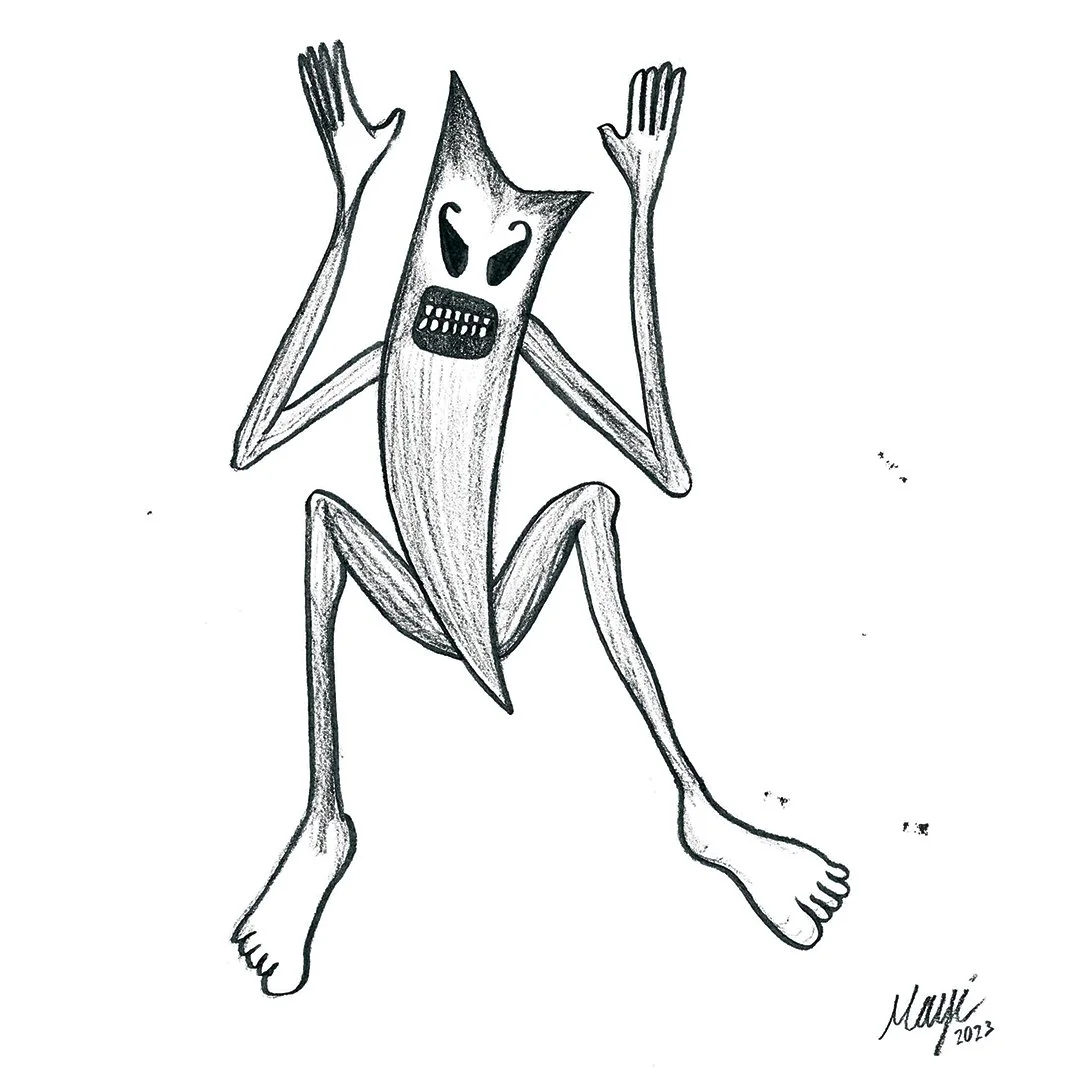
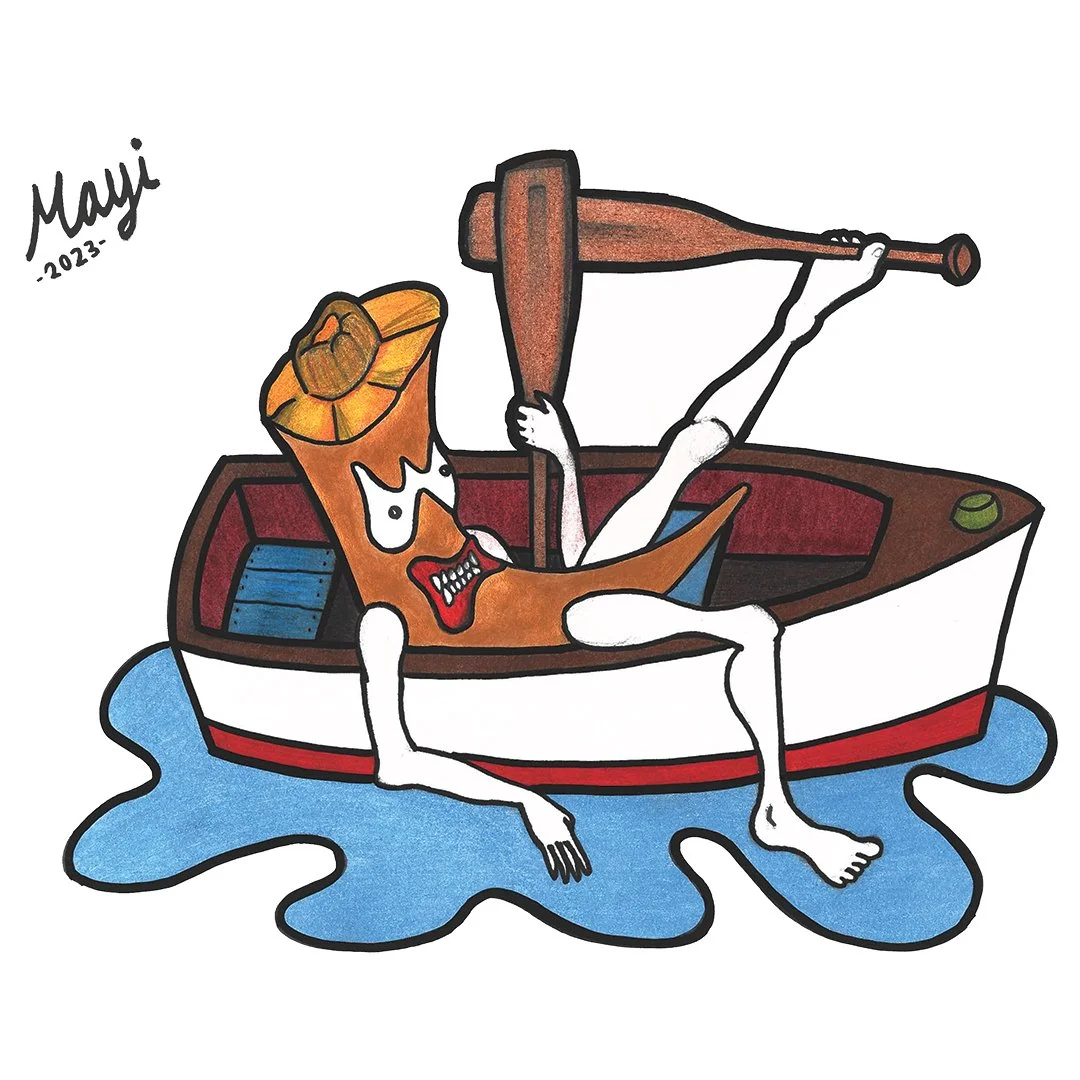
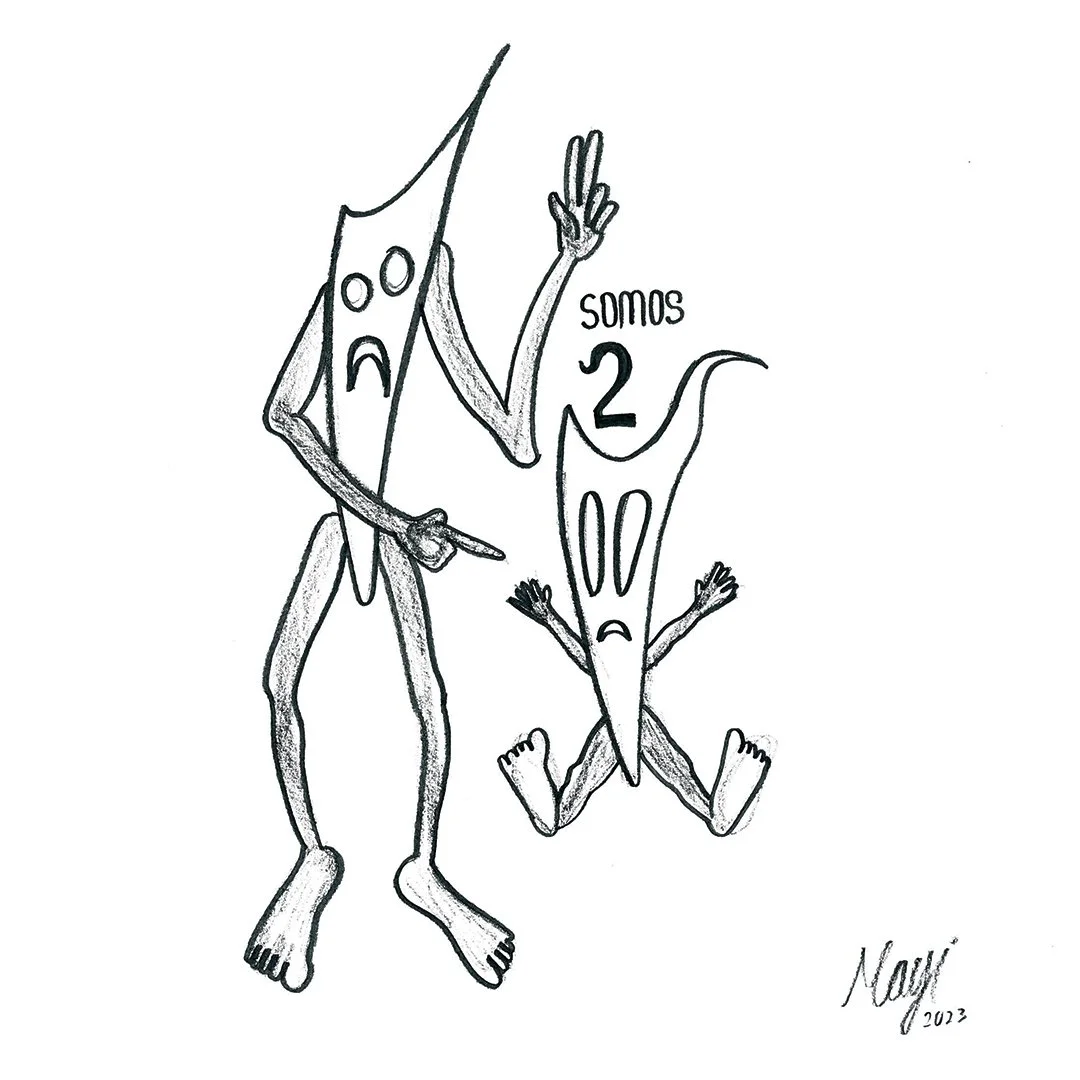
We foreigners carry our flags deep within. Migrating as a child can be an equally wonderful and traumatizing experience—it often leaves you feeling displaced. This displacement is a common condition of being an immigrant yet we always feel that we take a piece of our motherland wherever we go. From this notion I draw my inspiration for flags as inherent patterns embodied by foreigners, signifying a borderless connection to the land they represent. Flags emblematize nationality but also culture; through birth we inherit their history and become susceptible to the conditions of our natal surroundings. I propose to demonstrate this concept with a collection of paintings and sculptures depicting Cuban balseros (rafters) facing the wrath of the open sea to escape the hardship and misery of living in Cuba. These individuals will be presented as flag forms, tying them to their origins. They are predominantly faceless figures rather identified by means of posture, body parts, and overall body language. I have primarily focused on illustrating and studying indigenous Taino deity sculptures and Wifredo Lam-inspired body parts. The triangular torso shape is directly drawn from the Taino idol Cemi. The limbs of these displaced individuals are emphasized by overtly large feet as analogies to strong footings in foreign grounds. With this concept I hope to bring to light the ingenuity of immigrants willing to risk their lives for a brighter future. As someone previously in this position, I feel obliged to bring to discussion the social and political atrocities that continue to occur in Cuba; to expose the harsh reality and corrupt leadership that has consequently led to an often overlooked diaspora.

Los extranjeros llevamos nuestras banderas muy adentro. Migrar de niño puede ser una experiencia igualmente maravillosa y traumática, a menudo puede hacer que te sientas desplazado. Este desplazamiento es una condición común de ser inmigrante, pero siempre sentimos que llevamos un pedazo de nuestra patria a donde quiera que vayamos. De esta noción me inspiro para las banderas como patrones inherentes encarnados por extranjeros, lo que significa una conexión sin fronteras con la tierra que representan. Las banderas simbolizan la nacionalidad, pero también la cultura; A través del nacimiento heredamos su historia y nos volvemos susceptibles a las condiciones de nuestro entorno natal. Propongo demostrar este concepto con una colección de pinturas y esculturas que representan balseros cubanos frente a la ira del mar abierto para escapar de las dificultades y la miseria de vivir en Cuba. Estos individuos serán presentados como formas de bandera, vinculándolos a sus orígenes. Son predominantemente figuras sin rostro y más bien identificadas por medio de la postura, las partes del cuerpo y el lenguaje corporal en general. Me he centrado principalmente en ilustrar y estudiar esculturas de deidades indígenas taínas y partes del cuerpo inspiradas en Wifredo Lam. La forma triangular del torso se extrae directamente del ídolo taíno Cemi. Las extremidades de estos individuos desplazados se enfatizan con pies abiertamente grandes como analogías con bases fuertes en terrenos extranjeros. Con este concepto espero sacar a la luz el ingenio de los inmigrantes dispuestos a arriesgar sus vidas por un futuro mejor. Como alguien anteriormente en esta posición, me siento obligado a llevar a discusión las atrocidades sociales y políticas que continúan ocurriendo en Cuba, para exponer la dura realidad y el liderazgo corrupto que en consecuencia ha llevado a una diáspora a menudo pasada por alto.